


-32x32h.png)
-32x32h.png)




















-80x80.png "John West")




















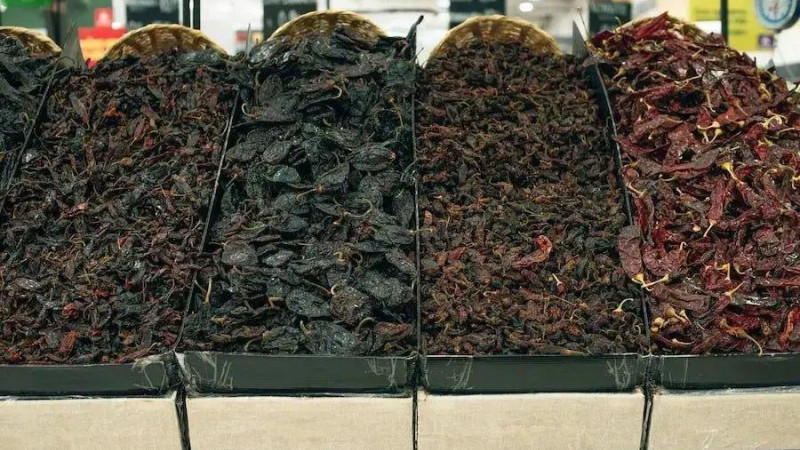
The Forgotten Negro Pepper
Keeping this situation in mind helps us understand the historical importance of black pepper. It was once the most pungent spice available. Other spices were tried as substitutes over the years, but each had its own drawbacks.
Etymology
The name Xylopia comes from the Greek words xylon pikron [ξύλον πικρόν], meaning "bitter wood". The word aethiopica refers to the tree's origin, though most of it actually grows in Ghana.
Negro Pepper as a Substitute
Negro pepper was once used in Europe as a pepper substitute. This changed when regular imports of black pepper from India began in the 16th century. After that, negro pepper mostly disappeared from use.
It only reappeared during times of war and shortage. The last known period of use was after World War II, lasting into the 1960s. Today, it is rarely found outside the countries where it is grown.
People often link the word "spice" with heat and pungency. In reality, only a few plants can give food that fiery quality.
The Rise of Chile
Chile is the best-known hot spice today. It comes from the New World, so it wasn't available in Europe, Asia or Africa until the 16th century. Yet now, it's hard to imagine food from any continent without it.
This history makes the importance of black pepper as the most pungent spice easier to understand. Many other spices were tried as substitutes over time, but each had limitations:
- Onion, garlic and spices with isothiocyanates (such as white mustard seeds or horseradish) lose their heat during cooking.
- Some spices, like grains of paradise or chaste tree, are simply too mild.
- Others, such as cubeb pepper and negro pepper, have a strong bitter taste.
Long pepper was the only good alternative, but it cost even more than black pepper. In Asia, cooks turned to fresh ginger for heat instead, but ginger wasn't available in Europe at that time.
Why We Like Pungent Food
It isn't fully clear why humans enjoy spicy food. There are several theories.
Some say hot spices were used to hide the taste of food that wasn't quite fresh. Others point out that pepper's high price made it a symbol of wealth. Some believe cooking with pepper grew out of its earlier use as medicine.
A more likely explanation may be biochemical. The body reads hot flavours as pain and responds by releasing endorphins. These natural painkillers can also create feelings of stimulation and even mild euphoria.
Tingling Spices: Not Quite Hot
Some spices create a different sensation altogether. Instead of heat, they cause a prickling or vibrating feeling in the mouth, often followed by numbness.
These are sometimes called "hot" or "pungent", but they really belong in a class of their own. The best-known example is East Asian Sichuan pepper. Others include Tasmanian pepper, Eurasian water pepper, and South American paracress.
Some cuisines combine these tingling spices with traditional hot spices, chiefly chiles, to create unique flavours.
Main Constituents
Negro pepper fruits contain essential oil, making up 2 to 4.5% of the fruit. This oil includes β-pinene, 1,8-cineol, α-terpineol, terpinene-4-ol, paradol, bisabolene and other terpenes.
Other studies have found linalool, (E)-β-ocimene, α-farnesene, β-pinene, α-pinene, myrtenol and β-phellandrene, along with traces of vanillin and 3-ethylphenol (Journal of Agricultural and Food Chemistry, 47, 3285, 1999) (online).
Among the non-volatile compounds, researchers have identified tetracyclic diterpenes of the kaurane type. These structures are based on a tetracyclo[11.2.1.01,10.04,9]hexadecane skeleton.
Kauranes, along with the similar kolavanes and trachylobanes, also appear in the bark (Phytochemistry, 21, 1365, 1982), (Phytochemistry, 36, 109, 1994).
Researchers have also studied the essential oils in the stem bark (0.85%) and leaves (0.5%) of X. aromatica. The bark oil is mainly α-pinene, trans-pinocarveol, verbenone and myrtenol. This is quite different from the leaf oil, which contains spathulenol, cryptone, β-caryophyllene and limonene (Planta medica, 60, 282, 1994).
Origin
Negro pepper comes from tropical Africa, from Ethiopia to Ghana. Two species, X. aethiopica and X. striata, are both used in local cooking there.
In South America, a related species, X. aromatica (also known as burro pepper), is used in similar ways by Brazilian Indios.
Leave a comment